viernes, 19 de agosto de 2016

TIME PREPOSITIONS


Prepositions of Time

In, at, on and no preposition with time words:

Prepositions of time - here's a list of the time words that need 'on', 'in', 'at' and some that don't need any preposition. Be careful - many students of English use 'on' with months (it should be 'in'), or put a preposition before 'next' when we don't need one.

at
  • times: at 8pm, at midnight, at 6:30
  • holiday periods: at Christmas, at Easter
  • at night
  • at the weekend
  • at lunchtime, at dinnertime, at breakfast time
on
  • days: on Monday, on my birthday, on Christmas Day
  • days + morning / afternoon / evening / night: on Tuesday morning
  • dates: on the 20th of June
in
  • years: in 1992, in 2006
  • months: in December, in June
  • decades: in the sixties, in the 1790s
  • centuries: in the 19th century
  • seasons: in winter, in summer
  • in the morning, in the afternoon, in the evening
no
prep
  • next week, year, month etc
  • last night, year etc
  • this morning, month etc
  • every day, night, years etc
  • today, tomorrow, yesterday
 
 
WATCH THE NEXT TIME PREPOSITION TIME VIDEO:


COPY IN YOUR NOTE BOOK THIS EXERCISE:
 
Complete the sentences below by choosing the correct prepositions, then press "Check" to check your answers.
1. Jane is arriving January 26 2 o'clock the afternoon.

2. It snows here every year December. We always go outside and play in the snow Christmas day.

3. Michael is leaving Friday noon.

4. Frankie started working for her law firm 1995.

5. Franklin began working on the project yesterday.

6. Normally, New Year's Eve, it's tradition to kiss the one you love midnight.

7 Don't be ridiculous; there were no telephones the seventeenth century! The telephone was invented the 1870s.

8. The plane leaves tomorrow morning 8:00 AM.

9. The hills here are covered with wildflowers early spring.

10. We met at the restaurant 6:30 and stayed 10:30.

SIMPLE PRESENT

SIMPLE PRESENT


Simple present


El "simple present" se utiliza:

  • Para expresar hábitos y rutinas, hechos generales, acciones repetidas o situaciones, emociones y deseos permanentes:
    I smoke (hábito); I work in London (permanencia); London is a large city (hecho general)
  • Para dar instrucciones o indicaciones:
    You walk for two hundred meters, then you turn left.
  • Para hablar de eventos programados, presentes o futuros:
    Your exam starts at 09.00.
  • Para referirse al futuro, detrás de algunas conjunciones: after, when, before, as soon as, until:
    He'll give it to you when you come next Saturday.
¡Cuidado! El "simple present" no se utiliza para hablar de lo que está ocurriendo en este momento.

Ejemplos

  • Hábitos y rutinas
    He drinks tea at breakfast.
    She only eats fish.
    They watch television regularly.
  • Eventos y acciones repetidos
    We catch the bus every morning.
    It rains every afternoon in the hot season.
    They drive to Monaco every summer.
  • Hechos generales
    Water freezes at zero degrees.
    The Earth revolves around the Sun.
    Her mother is Peruvian.
  • Instrucciones o indicaciones
    Open the packet and pour the contents into hot water.
    You take the No.6 bus to Watney and then the No.10 to Bedford.
  • Eventos programados
    His mother arrives tomorrow.
    Our holiday starts on the 26th March
  • Construcciones de futuro
    She'll see you before she leaves.
    We'll give it to her when she arrives.
Observa el siguiente video


Formación del "simple present": to think

AfirmativaInterrogativaNegativa
I thinkDo I think?I do not think
You thinkDo you think?You do not think
He thinksDoes he think?He does not think
She thinksDoes she think?She does not think
It thinksDoes it think?It does not think
We thinkDo we think?We do not think.
They thinkDo they think?They do not think.

Notas sobre la tercera persona del singular del "simple present"

  • En la tercera persona del singular, el verbo siempre termina en -s:
    he wants, she needs, he gives, she thinks.
  • Para las formas negativa e interrogativa, se emplea DOES (= tercera persona del auxiliar 'DO') + el infinitivo del verbo.
    He wants ice cream. Does he want strawberry? He does not want vanilla.
  • Verbos que terminan en -y : en la tercera persona del singular, se cambia la -y por -ies:
    fly --> flies, cry --> cries
    Excepción: cuando una vocal precede a la -y:
    play --> plays, pray --> prays
  • Añadimos -es a los verbos que terminan en:-ss, -x, -sh, -ch:
    he passes, she catches, he fixes, it pushes
Ejemplos
  • He goes to school every morning.
  • She understands English.
  • It mixes the sand and the water.
  • He tries very hard.
  • She enjoys playing the piano.
Observa el siguiente video:

 
Negative Sentences (Frases negativas)
Sujeto + verbo auxiliar (to do) + auxiliar negativo (“not”) + verbo.
Ejemplos:
  I do not [don’t] talk. (Yo no hablo.)
  He does not [doesn’t] eat. (Él no come.)
  They do not [don’t] learn. (Ellos no aprenden.)
Nota: En frases negativas, el verbo auxiliar (“to do”) cambia y el verbo principal va en el infinitivo.
3. Interrogative Sentences (Frases interrogativas)
Verbo auxiliar (to do) + sujeto + verbo principal?
Ejemplos:
 Do you talk? (¿Hablas tú?)
 Does he eat? (¿Come él?)
 Do they learn? (¿Aprenden ellos?)
Nota: Como en frases negativas, en frases interrogativas el verbo auxiliar (“to do”) cambia y el verbo principal va en el infinitivo.

Para más información sobre la estructura de frases, ver la lección, construir frases.
Nota: Como en frases negativas, en frases interrogativas el verbo auxiliar (“to do”) cambia y el verbo principal va en el infinitivo.

Para más información sobre la estructura de frases, ver la lección, construir frases.

Uses (Usos)

1. El presente simple se utiliza para hablar de cosas que suceden habitualmente. A diferencia con el español, no se usa el presente simple para hablar sobre algo que está pasando en el momento en el que hablamos.
Se suele utilizar el presente simple con adverbios de tiempo:
always (siempre), every day (cada día), usually (normalmente),
often (a menudo), sometimes (a veces), rarely (raramente),
hardly ever (casi nunca), never (nunca)
Ejemplos:
  I always talk to my mother on Sunday. (Siempre hablo con mi madre el domingo.)
  He never eats vegetables. (Nunca come las verduras.)
  They usually learn something new in class. (Normalmente aprenden algo nuevo en la clase.)
Excepción:
Los adverbios de tiempo van delante del verbo, excepto el verbo “to be” (ser/estar). Cuando se usa “to be” el verbo va delante del adverbio.
Ejemplos:
  I am always happy. (Siempre estoy contento.)
  He is often sick. (A menudo él está enfermo.)
  They are rarely late. (En raras ocasiones llegan tarde.)
2. Se utiliza para hablar de generalidades o hechos científicos.
Ejemplos:
  He does not [doesn’t] eat vegetables. (Él no come verduras.)
  She works in a hospital. (Ella trabaja en una hospital.)
  Elephants live in Africa. (Los elefantes viven en África.)
  Bogota is in Colombia. (Bogotá está en Colombia.)
 Do children like animals? (¿Les gustan a los niños los animales?)
  Adults do not [don’t] know everything. (Los adultos no lo saben todo.)
3. Se usa para eventos programados en el futuro próximo.
Ejemplos:
  The train leaves at 10:00. (El tren sale a las 10h.)
  The party is tonight. (La fiesta es esta noche.)
 Does the festival start tomorrow? (¿Empieza el festival mañana?)
  The plane does not [doesn’t] arrive today. (El avión no llega hoy.)
4. Se usa para instrucciones (el imperativo).
Ejemplos:
 Open the window. (Abre la ventana.)
 Eat the vegetables. (Come las verduras.)
 Don’t cry. (No llores.)
 Do your homework. (Haz los deberes.)
 Call your mother. (Llama a tu madre.)

 
OBSERVA EL SIGUIENTE VIDEO


EXERSICE
 
COPY IN YOUR NOTEBOOK THIS EXERCISES AND ANSWER THEM
 

Form of Affirmative Sentences - Part 1

Choose the correct form.
  1. We sometimes books.
  2. Emily to the disco.
  3. It often on Sundays.
  4. Pete and his sister the family car.
  5. I always to the bus stop.

Form of Affirmative Sentences - Part 2

Put the verbs into the correct form.
  1. I (to like) lemonade very much.
  2. The girls always (to listen) to pop music.
  3. Janet never (to wear) jeans.
  4. Mr Smith (to teach) Spanish and French.
  5. You (to do) your homework after school.

Simple present with 'have' and 'be'

Fill in the correct form of the verbs.
  1. We (to have) a nice garden.
  2. She (to be) six years old.
  3. Simon (to have) two rabbits and five goldfish.
  4. I (to be) from Vienna, Austria.
  5. They (to be) Sandy's parents.

Negative Sentences

Make negative sentences.
  1. My father makes breakfast. →
  2. They are eleven. →
  3. She writes a letter. →
  4. I speak Italian. →
  5. Danny phones his father on Sundays. →

Questions

Make questions.
  1. you / to speak / English →
  2. when / he / to go / home →
  3. they / to clean / the bathroom →
  4. where / she / to ride / her bike →
  5. Billy / to work / in the supermarket →

Signal Words

Find the signal words for simple present.
  1. Which is a signal word for simple present?
  2. Which is a signal word for simple present?
  3. Which is a signal word for simple present?
  4. Which is not a signal word for simple present?
  5. Which is not a signal word for simple present?

    Activities for testing review:
https://1drv.ms/b/s!AupwFvFTkMQxgV_aKyJrqxzmnLlv

ELABORA UN COMENTARO ACERCA DE LO QUE TU APRENDISTE SOBRE EL SIMPLE PRESENT (UN PARRAFO DE MÍNIMO 5 RENGLONES), COLOCALO EN EL ESPACIO DESTINADO A LOS COMENTARIOS EN ESTE BLOG.
 

sábado, 18 de junio de 2016

PRESENT PROGRESSIVE OR CONTINOUOS

PRESENT PROGRESSIVE OR CONTINOUOS

OBSERVA EL SIGUIENTE VIDEO:


Introduction

The present progressive puts emphasis on the course or duration of an action.
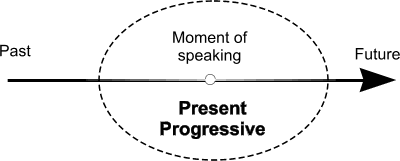
Time line
The present progressive is used for actions going on in the moment of speaking and for actions taking place only for a short period of time. It is also used to express development and actions that are arranged for the near future.
Present progressive is also known as present continuous.

CHECK THE NEXT VIDEO:


Use a form of to be and the infinite verb plus -ing.

Use:
  • am with the personal pronoun I
  • is with the personal pronouns he, she or it (or the singular form of nouns)
  • are with the personal pronouns you, we, they (or the plural form of nouns)
 affirmativenegativequestion
II am playing.I am not playing.Am I playing?
he, she, itHe is playing.He is not playing.Is he playing?
you, we, theyYou are playing.You are not playing.Are you playing?

Tips on how to form negative sentences and questions


In negative sentences, we put not between the form of be and the verb.
In questions, we simply swop the places of subject and the form of be.

LOOK AT THE NEXT VIVEO


EXERCISE

COPY IN YOUR NOTEBOOK THE NEXT EXERCISES AND ANSWER THEM

Complete the table with the correct forms.
 affirmativenegativequestion
II am working.
youYou are jumping.
he He is not dreaming.
she Is she sleeping?
itIt is snowing.
we Are we singing?
you You are not fighting.
they Are they reading?

Use the words below to make sentences in present progressive.
  1. I / to read a book -
  2. it / to rain -
  3. he / to repair his bike -
  4. they / to watch a film -
  5. the cat /to sleep on the chair -
  6. Jane and Emily / to do their homework -
  7. Bill / to wait at the bus stop -
  8. we / to listen to the radio -
  9. the children / to play a game -
  10. Laura / to walk the dog -
Transform the sentences below into negative sentences.
  1. I am watching TV. -
  2. I am talking. -
  3. They are drawing. -
  4. He is opening the window. -
  5. Angela is cleaning the bathroom. -
  6. We are helping in the garden. -
  7. You are singing. -
  8. It is raining. -
  9. She is joking. -
  10. I am tidying up my room. -
Write questions with the words below.
  1. Peter / to go / to the cinema -
  2. they / to play / a game -
  3. she / to listen /to the radio -
  4. I / to dream -
  5. they / to pack / their bags -
  6. you / to do / the washing-up -
  7. we / to talk / too fast -
  8. they / to clean / the windows -
  9. she / to watch / the news -
  10. you / to pull / my leg -
Ask for the information in the bold part of the sentence.
  1. Ashley is going to a restaurant. -
  2. Gareth is reading the paper. -
  3. Stacey is playing in the garden. -
  4. She is wearing a red dress. -
  5. Britney is doing her homework. -
  6. Mandy is leaving at nine. -
  7. Joe is repairing his bike. -
  8. Amanda is going out with Dan. -
  9. They are meeting at two o'clock. -
  10. Sandy is looking for Phil. -
LOOK AT THIS VIDEO ABOUT


PRACTICE IT...


WRITE A COMMENT ABOUT WHAT DID YOU LEARN WITH THIS ENTRY...


lunes, 30 de mayo de 2016

La construcción "I used to" en Inglés

En esta lección os vamos a explicar una estructura que se usa bastante en inglés y que no es muy difícil: "I used to" que significa "yo solía".

OBSERVA EL SIGUIENTE VIDEO


Uso y Significado de la 'used to'

La estructura 'used to' se usa para decir que algo se hacía en el pasado y ya no se hace:
My wife used to make cookies years ago
Mi mujer solía hacer galletas hace unos años

Estructura

Para las oraciones afirmativas la construcción es:
SUJETO + used to + VERBO
Si os fijáis la oración la estructura está en past simple y siendo "used" el pasado de "use".
I used to go swimming every morning
Yo solía ir a nadar todas las mañanas
RECORDAD: esta estructura solo puede ser usada en "past simple". No se puede decir:
I use to go swimming (INCORRECTO)
Yo suelo ir a nadar


Negación con "I used to"

La negación se forma como cualquier oración en "past simple" con el auxiliar "did" y el adverbio "not":
SUJETO + did not use to + VERBO
my mother did not use to read books when I was a child
mi madre no solía leer libros cuando yo era joven
Alternativamente se puede construir la negación con otras partículas como "never":
SUJETO + never used to + VERBO
I never used to spend money
Yo no solía gastar dinero

La interrogación con "I used to"

La interrogación se construye también con el auxiliar "did" siguiendo las reglas del " past simple":
did SUJETO + use to + VERBO?
Did you use to play chess at school?
¿Solías jugar al ajedrez en la escuela?


ESCUCHA LA SIGUIENTE CANCION:


used to

Complete the sentences with the affirmative, negative or interrogative form of used to and the words in brackets. Use contractions where possible.
used to           didn't use to              didn't use to          Did they use to            used to                    did you use to                              didn't use to                   used to

  1. David Beckhamplay for Manchester United.score
  2. Wehave a computer, but we do now.score
  3. (they) work together?score
  4. That restaurantbe a clothes shop.score
  5. Shelike him, but now they're married.score
  6. Where(you) go to school?score
  7. Therebe a police station here.score
  8. Ilike vegetables, but I do now.


jueves, 19 de mayo de 2016

ADDITION CONNECTORS

And one more thing . . .

Look at this video:


Lesson Topic: Using Connectors and Words that Add to Ideas. 
The library on 5th Avenue in New York City is one of the best places to do research.  It has hundreds of the most respected magazines and journals in the world.  
Look at these two sentences. 

Is there anything wrong with them? 

There is nothing wrong with them, but a word that connects these two sentences is often added. 

Adding a connector would clearly show a relationship between the two sentences and ideas.


In this lesson, we would like to introduce connectors and words that are commonly used in professional, business, and university writing. 


Although the words have different grammatical names, they share one thing in common: they all continue or add to ideas that were written in the preceding sentence.


Additionally,Besides that,Not only...but also
AlsoFurthermore,Too
AndIn addition, 
As wellMoreover, 
   

These words are not interchangeable.  In other words, you cannot remove one of these words and add any other.  

The best way to explain how to use these words is to simply give you examples.  One thing they all have in common is that they are usually attached to clauses. 

That means they are attached to a group of words that contains a subject and a verb.  For more information on clauses, see our lessons on sentence fragments and run-on sentences

We will use the same sentences in order to illustrate how the words are used and to show their different positions in the sentences. 

The positions of the words that we show you are the most common but not necessarily the only positions.

Moreover,
The library on 5th Avenue in New York City is one of the best places to do research.  Moreover, it has hundreds of the most respected magazines and journals in the world.  
In addition,
The library on 5th Avenue in New York City is one of the best places to do research.  In addition, it has hundreds of the most respected magazines and journals in the world.  
Furthermore,
The library on 5th Avenue in New York City is one of the best places to do research.  Furthermore, it has hundreds of the most respected magazines and journals in the world.  
Also
The library on 5th Avenue in New York City is one of the best places to do research.  It also has hundreds of the most respected magazines and journals in the world.   *The word also comes before the verb.  If the verb is a form of to be, also is placed after the verb.
As well
The library on 5th Avenue in New York City is one of the best places to do research.  It has hundreds of the most respected magazines and journals in the world as well.  
Too
The library on 5th Avenue in New York City is one of the best places to do research.  It has hundreds of the most respected magazines and journals in the world, too.
Additionally,
The library on 5th Avenue in New York City is one of the best places to do research.  Additionally, it has hundreds of the most respected magazines and journals in the world.  
And
The library on 5th Avenue in New York City is one of the best places to do research, and it has hundreds of the most respected magazines and journals in the world.  
Not only. . . but also
The library on 5th Avenue in New York City is not only one of the best places to do research but also has hundreds of the most respected magazines and journals in the world. *The subject after but also is usually omitted if but and also remain together, and the subject is the same for both clauses (parts) of the sentence. 
Besides that,
The library on 5th Avenue in New York City is one of the best places to do research.  Besides that, it has hundreds of the most respected magazines and journals in the world.*That refers to what was said in the first sentence.  Though this use of the word besides is not written often, it is commonly used in speech.  Besides must be followed by an object.
Quiz
Directions: Rewrite the following sentences with the connectors and words we learned in this lesson.
My professor is an extremely fascinating person.  She tells some of the most interesting stories I have ever heard.  
1.)  Additionally,
____________________________________________________
2.)  In addition,
____________________________________________________
3.)  Too
____________________________________________________
4.)  Also
____________________________________________________
5.)  Furthermore,
____________________________________________________
6.)  Besides that,
____________________________________________________
7.) And
____________________________________________________
8.)  Moreover,
____________________________________________________
9.)  As well
____________________________________________________
10.)  Not only...but also
____________________________________________________
 
Rewrite the next biography put the connectors of addition for the correct place:
 

Mohandas Karamchand Gandhi


Mohandas Karamchand Gandhi (/ˈɡɑːndi, ˈɡæn-/; Hindustani: [ˈmoːɦənd̪aːs ˈkərəmtʃənd̪ ˈɡaːnd̪ʱi] ( listen); 2 October 1869 – 30 January 1948) was the preeminent leader of the Indian independence movement in British-ruled India. ________________Employing nonviolent civil disobedience, Gandhi led India to independence and inspired movements for civil rights and freedom across the world. The honorific Mahatma (Sanskrit: "high-souled", "venerable")—applied to him first in 1914 in South Africa,—is now used worldwide. He is also called Bapu (Gujarati: endearment for "father", "papa") in India. __________________, In common parlance in India he is often called Gandhiji. He is unofficially called the Father of the Nation.
Born and raised in a Hindu merchant caste family in coastal Gujarat, western India, and trained in law at the Inner Temple, London, Gandhi first employed nonviolent civil disobedience as an expatriate lawyer in South Africa, in the resident Indian community's struggle for civil rights. After his return to India in 1915, he set about organising peasants, farmers, _________________ urban labourers to protest against excessive land-tax and discrimination. Assuming leadership of the Indian National Congress in 1921, Gandhi led nationwide campaigns for easing poverty, expanding women's rights, building religious and ethnic amity, ending untouchability, but above all for achieving Swaraj or self-rule, ___________.
 Gandhi famously led Indians in challenging the British-imposed salt tax with the 400 km (250 mi) Dandi Salt March in 1930, _______ later in calling for the British to Quit India in 1942. He was imprisoned for many years, upon many occasions, in both South Africa and India. Gandhi attempted to practise nonviolence and truth in all situations, _______ advocated that others do the same. He lived modestly in a self-sufficient residential community _______ wore the traditional Indian dhoti and shawl, woven with yarn hand-spun on a charkha. He ate simple vegetarian food, and also undertook long fasts as a means of both self-purification and social protest.
 ______ Gandhi's vision of an independent India based on religious pluralism, however, was challenged in the early 1940s by a new Muslim nationalism which was demanding a separate Muslim homeland carved out of India. Eventually, in August 1947, Britain granted independence, but the British Indian Empire was partitioned into two dominions, a Hindu-majority India _______Muslim Pakistan. As many displaced Hindus, Muslims, and Sikhs made their way to their new lands, religious violence broke out, especially in the Punjab and Bengal. _______ Eschewing the official celebration of independence in Delhi, Gandhi visited the affected areas, attempting to provide solace. In the months following, he undertook several fasts unto death to promote religious harmony. _______ The last of these, undertaken on 12 January 1948 at age 78, _______ had the indirect goal of pressuring India to pay out some cash assets owed to Pakistan. Some Indians thought Gandhi was too accommodating. Nathuram Godse, a Hindu nationalist, assassinated Gandhi on 30 January 1948 by firing three bullets into his chest at point-blank range.

_______His birthday, 2 October, is commemorated as Gandhi Jayanti, a national holiday, and world-wide as the International Day of Nonviolence.
WRITE THE INFORMATION IN THE BLANKS FOR COMPLETE THE REPORT
 Name: __________________________________________
Born­­­­­­­: ___________________________________________
Place: ___________________________________________
Died: ___________________________________________
Place: ___________________________________________
Cause of death: ____________________________________________
Resting place: _____________________________________________
Other names: _____________________________________________
Ethnicity: _____________________________________________
Education: _____________________________________________
Alma mater: _____________________________________________
Known for: _____________________________________________
Movement: _____________________________________________
Religion: _____________________________________________
Married with: _____________________________________________
Children: _____________________________________________
Parents: _____________________________________________
 Rules to Remember!      
1These words are not interchangeable.  In other words, you cannot remove one of these words and add any other.  
2
In general, do not use two of these words or phrases in the same sentence.  The following sentence is incorrect:
My professor is an extremely fascinating person.  Furthermore, she tells some of the most interesting stories I have ever heard as well 
3
In general, when you use these words and connectors, make sure the two sentences/ideas are related.  The second sentence/idea should add information that is specifically related to the first idea.  Take a look at the following example:
The library on 5th Avenue in New York City is one of the best places to do research.  Furthermore, lots of people like to go to libraries to read.   
This first sentence discusses the importance and usefulness of the library on 5th Avenue in New York City.  The second sentence tells you that people like to go to libraries.  Although these sentences both talk about libraries, the second sentence (which has furthermore) does not add information related to the library on 5th Avenue in New York City.  Therefore, the second sentence inappropriately uses furthermore.
4
Don't overuse connectors!  It is unnecessary to use them everywhere in your writing.  Use connectors when you want to do the following:
  • clearly show a relationship between ideas
  • add information that builds on the idea in the preceding sentence
5We highly recommend you look at our lessons on semicolons and commas